You are getting ready to close on a property and you see a big charge for homeowners insurance on your settlement statement. Wait, do you really have to pay a full year of insurance at closing? Is that part of closing costs? Or is it a separate expense?
This question confuses a lot of buyers. The short answer: yes, you typically pay for homeowners insurance before or at closing. But how it shows up on your paperwork depends on your lender and how the transaction is structured. Let us break it down.
In this Article:
What Are Closing Costs?
Closing costs are the fees and expenses you pay when you finalize a real estate purchase. They cover services from the lender, title company, attorneys, appraisers, and government agencies.
Common Closing Costs
Typical closing costs include loan origination fees, appraisal fees, title search fees, title insurance premiums, attorney fees, recording fees, and transfer taxes. These costs usually add up to 2% to 5% of the purchase price.
Closing Costs vs. Prepaids
Here is where the confusion starts. There is a difference between “closing costs” and “prepaid expenses.” Closing costs pay for services related to the transaction. Prepaid expenses pay for things you owe in advance, like insurance and taxes. Your closing disclosure separates them into different sections. But your cash to close includes both.
How Homeowners Insurance is Typically Handled in Closings
Your lender wants to know the property is insured from day one. If the house burns down the week after closing, the lender needs to know their investment is protected. That is why they require proof of insurance before they release the loan funds.
The Standard Process
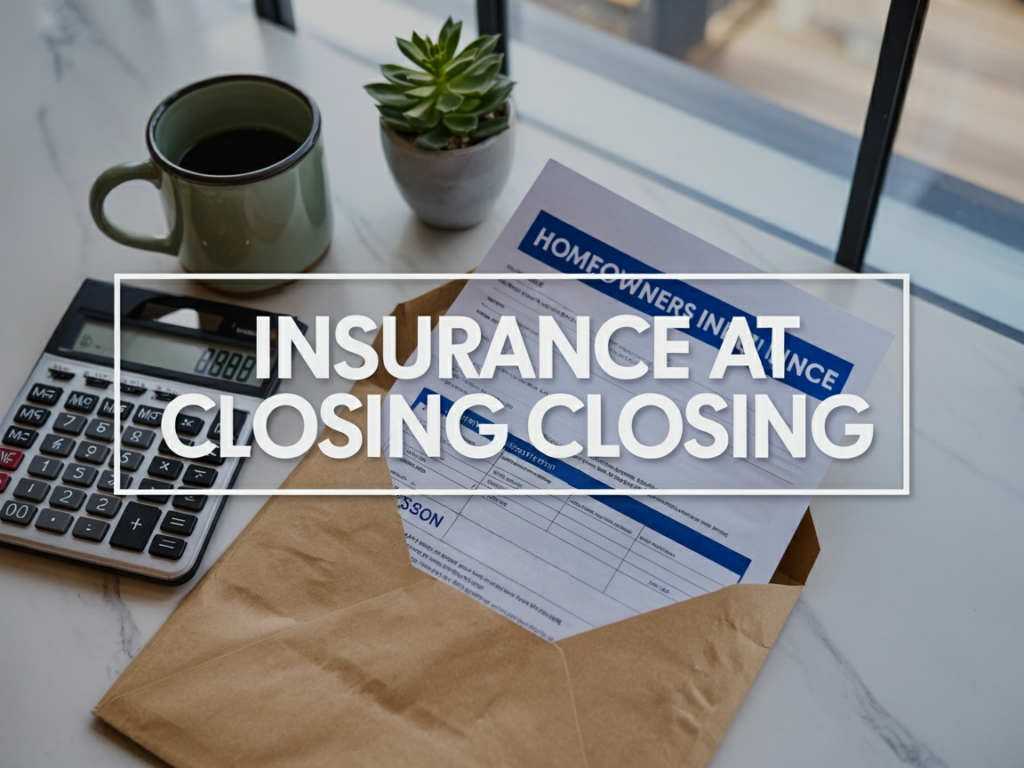
Here is how it usually works. You shop for a homeowners insurance policy during the escrow period. You choose a policy and pay the first year’s premium before closing day. You bring proof of payment (called an insurance binder or declarations page) to the closing. The lender verifies coverage and releases the funds.
Most buyers pay the first year’s premium directly to the insurance company before closing. The payment does not go through the title company or the lender. You handle it separately.
Is the First Year of Homeowners Insurance Included in Closing Costs?
Technically, no. The first year of homeowners insurance is a prepaid expense, not a closing cost. It shows up on your closing disclosure under the “Prepaids” section, not the “Closing Costs” section.
Why the Distinction Matters
The distinction matters because some loan programs cap how much the seller can contribute toward closing costs. If you are negotiating seller credits, those credits usually apply to closing costs, not prepaids. Knowing the difference helps you negotiate smarter.
But It Still Affects Your Cash to Close
Even though it is not technically a “closing cost,” the insurance premium still affects how much money you need at closing. Your cash to close includes your down payment, closing costs, and prepaid expenses. The insurance premium is part of that total.
Escrow Accounts and Ongoing Insurance Payments
On top of the first year’s premium, your lender may also require you to fund an escrow account at closing. This account holds money for future insurance and tax payments.
How Escrow Funding Works
Your lender collects a few months of insurance premiums upfront and deposits them into escrow. Then each month, a portion of your mortgage payment goes into the escrow account. When your next annual premium comes due, the lender pays it from the escrow funds.
The initial escrow deposit is another prepaid expense that shows up on your closing disclosure. It usually equals two to three months of insurance premiums. This is on top of the first year you already paid.
Why Lenders Require Homeowners Insurance at Closing
Lenders require insurance because the property is their collateral. If something destroys the property and there is no insurance, the lender loses their security for the loan.
What Lenders Want to See
Your lender wants proof that you have an active policy with enough coverage to protect the property’s value. They want to see the property address, the coverage amount, the policy dates, and the lender listed as the mortgagee or loss payee. Without this proof, your closing will not happen.
Cash Buyers and Insurance
If you are buying with cash, no lender requires you to carry insurance. The choice is entirely yours. Many cash investors who buy at foreclosure or tax deed auctions skip homeowners insurance on properties they plan to flip quickly. Others carry a basic policy to protect against fire, vandalism, or liability during the rehab period.
How to Prepare for Homeowners Insurance Payment at Closing
Here are the steps to make sure insurance does not cause problems on closing day:
Shop early. Start getting insurance quotes as soon as you go under contract. Do not wait until the last week before closing.
Compare at least three quotes. Premiums vary by carrier. Get quotes from multiple companies so you know you are getting a fair price.
Pay the first year before closing. Most lenders want to see proof of payment before the closing date. Pay the premium and get your declarations page ready to bring to closing.
Budget for escrow deposits. Remember that you will also need to fund the escrow account. Ask your lender exactly how much escrow funding they require so you can factor it into your cash to close.
Confirm coverage details. Make sure your policy meets your lender’s requirements. The coverage amount, deductible, and named parties all need to match what the lender expects.
Special Considerations for Investors
If you are buying an investment property, standard homeowners insurance may not apply. You might need a landlord policy or a vacant property policy instead. Investment property insurance costs more than owner-occupied coverage. Factor this into your deal analysis.
Before you buy any property, do your title research. A current owner search from EasyTitleSearch.com costs $59 and traces ownership back to the last vesting deed. Know the title history and recorded liens before you commit.
Conclusion: Understanding Your Closing Cost Obligations
The first year of homeowners insurance is a prepaid expense, not a closing cost. But it still affects how much cash you need at closing. You pay the first year’s premium before closing day and bring proof of payment. Your lender may also require escrow funding for future premiums.
Plan ahead, shop early, and budget for both the premium and the escrow deposit. Knowing these numbers in advance keeps closing day stress-free.