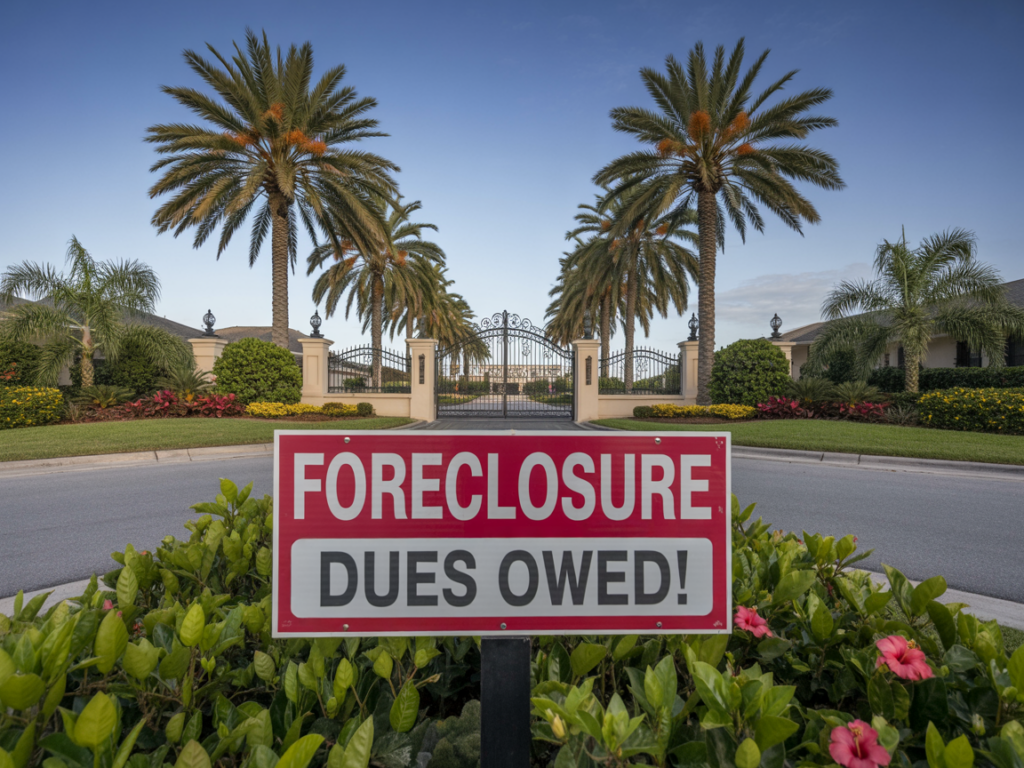
Many Florida investors assume that when a first mortgage forecloses, all HOA or condo-related debts automatically disappear. While a foreclosure often eliminates the recorded HOA lien, it does not always eliminate the assessment debt that the association is legally allowed to pursue. This misunderstanding is one of the most common reasons investors end up with surprise bills after purchasing a foreclosure property.
The key is understanding that the lien and the debt are two different things.
In this Article:
The Lien and the Debt Are Not the Same
When an owner stops paying HOA or condo dues, the association is owed money and may record a lien in the county’s official records to secure that debt. The lien is simply a recorded claim against the property. The debt is the unpaid assessments, interest, late fees, and sometimes attorney fees.
A foreclosure can wipe out the lien, but that does not necessarily erase the debt that it secures. Florida Statutes 718.116 and 720.3085 allow associations to collect specific unpaid assessments from the new owner. This is why an investor can take title free of the lien but still be responsible for the amount the previous owner owed.
Does a First Mortgage Foreclosure Wipe Out the HOA Lien?
In most cases, yes. If the first mortgage foreclosure is handled correctly, the recorded HOA or condo lien is treated as a junior interest that is extinguished by the final judgment. This assumes the association was named correctly and served in the lawsuit, and the judgment clearly eliminates subordinate claims.
Once the sale is complete and the certificate of title is issued, the original lien no longer encumbers the property. Many investors feel safe at this point, but the financial exposure may not be over.
Does the HOA Debt Survive the Foreclosure Sale?
Often it does. Florida law allows associations to pursue specific unpaid assessments from the new owner who acquires the property after a foreclosure sale. If the new owner does not pay these amounts, the association can simply issue an estoppel showing the balance owed, wait the statutory period, and then record a new lien for that debt. The original lien has been removed, but the debt itself may still be outstanding.
This is also why many associations are now using HOA ownership change monitoring to track when units transfer at foreclosure auctions, so they can immediately establish the correct billing relationship with the new owner.
This is a surprise for many first-time foreclosure buyers, especially since most assume the foreclosure eliminated everything the owner owed to the association.
The Safe Harbor Rule and Why It Rarely Helps Investors
Florida’s safe harbor provision limits how much a first mortgage lender must pay in unpaid assessments when it takes title after a foreclosure. The lender usually pays the lesser of 12 months of assessments or one percent of the original mortgage amount. This protection applies to the first mortgage lender and its approved successors.
The safe harbor rule does not apply to third-party investors who win the foreclosure auction. Investors should assume they will owe the full amount unless an estoppel or legal review proves otherwise.
When an HOA Lien Might Not Be Wiped Out at All
There are situations where the association’s lien survives the foreclosure. This can happen if the association was not named as a defendant, was misnamed, was not served correctly, or if the legal description in the foreclosure documents was inaccurate. A defective judgment can also render the lien enforceable.
This is why reviewing both the foreclosure case and a complete title search is essential before bidding.
What Investors Should Do Before Bidding
Even though only three bullet points are used in this article, this list is important:
- Verify that the HOA or condo association was properly named and served in the foreclosure
- Review the association’s estoppel or ledger before bidding
- Understand that the unpaid assessments may survive even if the lien does not
These simple steps prevent expensive surprises after taking title.
Bottom Line
A first mortgage foreclosure in Florida usually wipes out the HOA or condo lien recorded in the public records, but it does not always eliminate the assessment debt behind it. For investors, the safe harbor rule rarely applies, and unpaid assessments often follow the property. Anyone bidding on a property involving an HOA or condo should review the association’s status, the foreclosure case, and any outstanding balances before placing a bid.