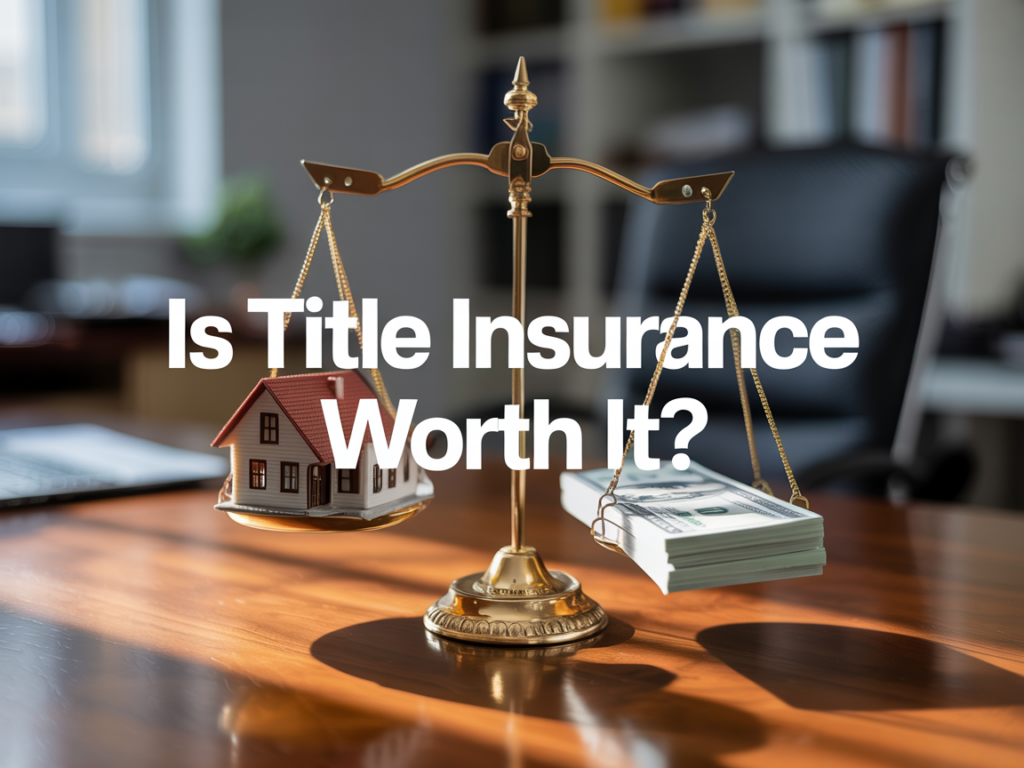
Title insurance is one of those closing costs that makes a lot of property buyers scratch their heads. You are already paying for inspections, appraisals, attorney fees, and a dozen other line items. Then someone tells you that you need to spend another $1,000 or more on title insurance. It is fair to wonder whether it is actually worth it or just another way for someone to take money out of your pocket.
In this article, we are going to look at both sides of the argument honestly. We will cover what title insurance does, why some people swear by it, why others think it is a waste, and how to decide what makes sense for your specific situation as a real estate investor.
In this Article:
What is Title Insurance and What Does it Cover?
Before we get into whether title insurance is worth it, let us make sure we are on the same page about what it actually does.
Title insurance is a one-time policy you buy at closing that protects you against problems with the property’s ownership history. Unlike car insurance or health insurance, which protect you against things that might happen in the future, title insurance protects you against things that already happened in the past but that nobody discovered before you bought the property.
The types of problems title insurance typically covers include:
Undisclosed liens: A previous owner might have had unpaid debts that resulted in liens being placed on the property. If those liens were not discovered during the title search, title insurance covers you.
Forged or fraudulent documents: If someone forged a signature on a deed somewhere in the property’s history, the entire chain of ownership could be compromised. Title insurance protects you if this kind of fraud is discovered after you close.
Errors in public records: County clerks and recording offices handle thousands of documents. Mistakes happen. A wrong legal description, a misspelled name, or a misfiled document can create title problems. Title insurance covers these kinds of errors.
Unknown heirs: Sometimes a previous owner passes away and their property is transferred through probate. If an unknown heir later surfaces and claims they have a right to the property, title insurance protects your ownership.
Boundary and survey disputes: If a neighbor or another party claims that part of your property actually belongs to them based on an old survey or legal description, title insurance can cover the legal costs to resolve the dispute.
There are two types of title insurance: lender’s policies and owner’s policies. Lender’s title insurance protects the bank or mortgage company that gave you a loan. Your lender will almost always require this if you are financing the purchase. Owner’s title insurance protects you, the buyer. This one is optional, and it is the policy most people debate about whether to buy.
Arguments for Title Insurance
Let us start with the case for buying title insurance. There are some legitimate reasons why many real estate professionals recommend it.
It is a one-time cost with lifetime coverage. Unlike homeowner’s insurance or flood insurance that you pay every year, title insurance is a single payment made at closing. That one payment covers you for as long as you own the property. When you think about it that way, the cost per year of ownership is actually pretty low. If you pay $1,200 for a policy and own the property for 10 years, that works out to $120 per year of coverage.
Title searches are not perfect. A title search is the process of examining public records to trace the property’s ownership history and look for problems. It is an essential step, and it catches most issues. But no title search can guarantee that every single problem has been found. Records get lost, documents get misfiled, and some issues simply do not show up in public records. Title insurance is the backup plan for when a title search misses something.
Legal defense is included. If someone challenges your ownership of the property, the title insurance company pays for your legal defense. Real estate litigation can cost tens of thousands of dollars. Even if the claim against you is completely bogus, you still have to pay a lawyer to fight it. Title insurance covers those costs, which is a significant benefit.
Some title defects are impossible to detect. Forgery is a good example. If someone forged a deed 15 years ago in the property’s chain of title, there may be no way to detect that forgery through a standard title search. The document looks legitimate on its face, and the county accepted it for recording. But if the forgery is later discovered, it can throw the entire ownership chain into question. Title insurance is one of the few protections against this kind of hidden defect.
It protects your heirs. Owner’s title insurance does not just protect you. It also extends to your heirs if you pass the property down. That means your family is protected against title defects that existed before your purchase, even after you are gone.
Arguments Against Title Insurance
Now let us look at the other side. There are real reasons why some investors and buyers question the value of title insurance.
Title claims are rare. The title insurance industry has one of the lowest claims rates of any type of insurance. According to industry data, title insurance companies typically pay out only about 4% to 5% of their premiums in claims. Compare that to other types of insurance where payout rates are much higher. Critics argue that the low claims rate means the risk of a title problem is so small that paying for insurance against it does not make financial sense for most buyers.
The title search already catches most problems. Before a title insurance company issues a policy, they conduct a title search. The vast majority of title issues are discovered and resolved during this search, before the policy is even issued. Some critics say you are essentially paying for the title search (which is valuable) and then paying extra for an insurance policy that covers a very small residual risk.
The cost can be significant on lower-value properties. For investors who buy properties at foreclosure or tax deed auctions, the margins are often tight. Adding $1,000 to $2,000 for title insurance on a property you bought for $50,000 can eat into your profits. When you are buying multiple properties per year, those costs add up fast.
It does not cover everything. Title insurance has exclusions. It typically does not cover problems that are disclosed to you before closing, issues you create yourself, environmental contamination, zoning violations, or problems that a physical inspection would reveal. Some buyers feel misled when they discover their policy does not cover the specific issue they are dealing with.
Auction purchases are harder to insure. If you buy properties at county foreclosure auctions or tax deed sales, getting title insurance can be difficult. Many title companies are reluctant to insure properties purchased at auction because the risk of title defects is higher. Even if you can find a company willing to insure the property, the policy might come with exceptions that exclude the most likely problems.
How to Decide If You Need Title Insurance
The answer depends on your situation. Here are some questions to ask yourself:
How are you buying the property? If you are getting a mortgage, your lender will require a lender’s title insurance policy. You do not have a choice on that one. The decision you do have is whether to also buy an owner’s policy. If you are buying with cash at an auction, you will not be required to buy any title insurance, so the decision is entirely yours.
How complicated is the property’s history? Properties with simple, clean ownership histories are less likely to have title problems. Properties that have been through foreclosure, tax sales, probate, or multiple transfers in a short period are more likely to have issues. The messier the history, the stronger the case for title insurance.
What is the property worth? On a high-value property, the potential financial loss from a title defect is enormous. A $2,000 insurance premium on a $500,000 property is cheap protection. On a $30,000 tax deed purchase, the math looks different.
What is your risk tolerance? Some investors are comfortable accepting the small risk of a title problem in exchange for saving money on title insurance. Others would rather pay for the peace of mind. Neither approach is wrong. It depends on how you operate.
Have you done your due diligence? Regardless of whether you buy title insurance, doing a title search before you purchase is essential. A title search reveals the ownership history, liens, and encumbrances so you know what you are getting into. At EasyTitleSearch.com, we provide current owner searches for just $59 that trace the title back to the last vesting deed. This is especially important for auction buyers who need to do their homework before bidding.
Case Studies: When Title Insurance Was Beneficial
To make this more concrete, here are some real-world scenarios where title insurance either saved the day or would have:
The undiscovered lien: An investor buys a foreclosure property and later discovers that a contractor filed a mechanic’s lien against the property before the foreclosure. The lien was not properly recorded and did not show up during the title search. Without title insurance, the investor would have been responsible for paying off the lien out of pocket. With title insurance, the insurance company covered the cost.
The forged deed: A buyer purchases a property that had been sold two years earlier by someone who forged the previous owner’s signature on the deed. The real owner eventually discovers the fraud and sues to get the property back. The buyer’s title insurance company steps in, handles the legal defense, and compensates the buyer for the loss.
The missing heir: A property is sold through probate after the owner passes away. Years later, an unknown child of the deceased owner surfaces and claims they have a legal right to the property. The buyer’s title insurance company defends the claim and covers the settlement.
The recording error: A county clerk transposes two digits in the property’s legal description when recording a deed. This error creates a gap in the chain of title that is not discovered until the next sale. Title insurance covers the cost of correcting the error and defending the owner’s rights.
These situations are uncommon, but they are not impossible. And when they happen, the financial consequences can be devastating without insurance.
Conclusion: Making an Informed Decision
Is title insurance a waste of money? It depends on who you ask and what kind of property you are buying. The statistics say that title claims are rare, which means most people who buy title insurance never use it. But for the small percentage of buyers who do face a title problem, the insurance can be worth many times what they paid for it.
For real estate investors buying at county foreclosure and tax deed auctions, the calculus is a little different. Title insurance is harder to get on auction purchases, and the cost can eat into your margins on lower-value deals. That is why doing thorough due diligence before you bid is so important.
Whether you decide to buy title insurance or not, a title search should always be part of your process. Knowing the ownership history, liens, and potential issues before you commit your money is just smart investing. At EasyTitleSearch.com, we make it easy and affordable with nationwide current owner searches for just $59. We do not sell title insurance, but we give you the information you need to make an informed decision about your investment.
At the end of the day, the best protection is knowledge. Do your research, know what you are buying, and make the choice that fits your situation and your budget.