If you invest in real estate or own property, you have probably come across the term “homestead” at some point. Maybe you saw it on a county records search, or maybe someone told you that you should file for a homestead exemption. But what does homestead actually mean, and why does it matter?
In this guide, we will explain what a homestead is, how homestead laws work, and why understanding them is important whether you are a homeowner, a real estate investor, or both.
In this Article:
Definition of a Homestead
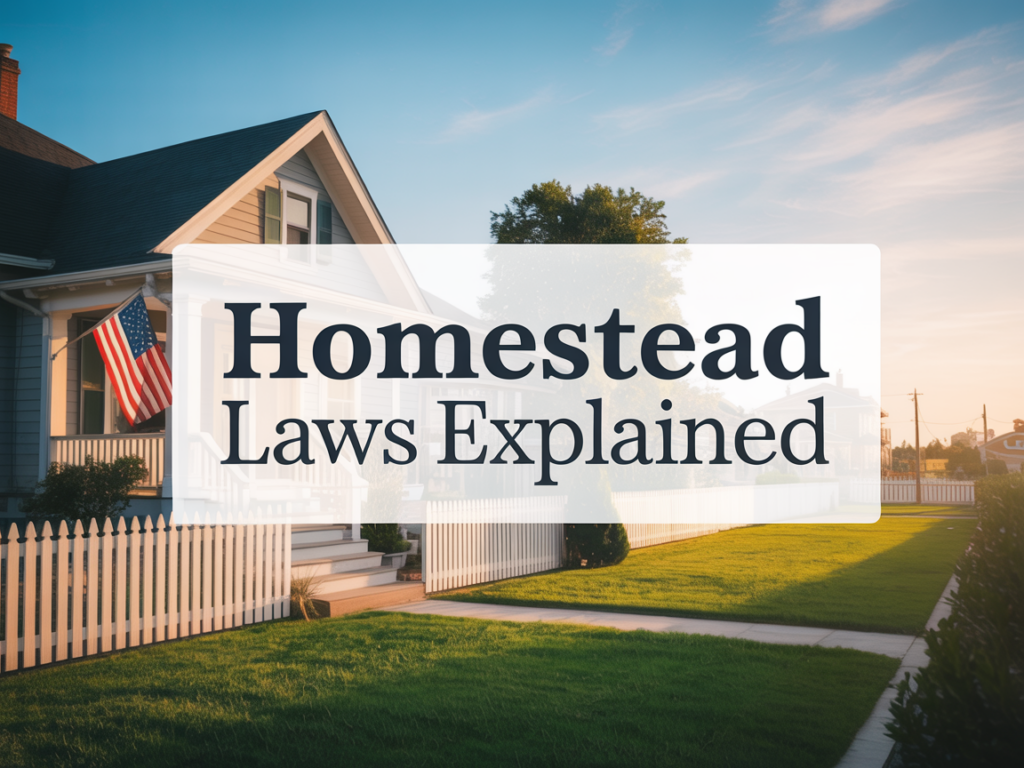
A homestead is a legal designation for the primary residence of a property owner. When a property is declared as a homestead, it receives certain legal protections under state law. These protections vary by state, but they generally fall into two categories: protection from creditors and property tax benefits.
In simple terms, your homestead is the house you live in as your main home. It is not your rental property, your vacation house, or your investment property. It is the one you call home.
The homestead designation is rooted in the idea that people should not lose the roof over their head because of financial trouble. Homestead laws exist to make sure that even if you run into debt or face a lawsuit, your primary residence has some level of protection.
History and Purpose of Homestead Laws
Homestead laws in the United States go back to the Homestead Act of 1862, which gave settlers 160 acres of public land if they agreed to live on it and improve it for at least five years. The idea was to encourage westward expansion and give ordinary people the chance to own land.
Over time, the concept evolved. Modern homestead laws are not about claiming free land. They are about protecting the home you already own from being seized by creditors or taxed at a higher rate than necessary. Every state has some version of homestead protection, though the specifics vary widely.
For real estate investors, homestead laws matter because they affect the properties you buy and sell. If you are purchasing a property at a foreclosure or tax deed auction, the homestead status of the property can influence what liens survive the sale, what exemptions are in place, and how the previous owner’s rights are handled.
Benefits of Homestead Designation
There are three main benefits to having your property designated as a homestead.
Protection from Creditors
The most significant benefit of homestead protection is that it can shield your home from being seized to pay off certain debts. If you get sued and lose, or if you owe money to creditors, homestead laws can prevent them from forcing the sale of your primary residence to collect the debt.
The level of protection varies dramatically by state. In Florida and Texas, homestead protection is nearly unlimited, meaning creditors cannot force the sale of your home regardless of its value. In other states, the protection is capped at a specific dollar amount. For example, a state might protect only the first $50,000 or $100,000 of your home’s value.
It is important to note that homestead protection does not cover all debts. It typically does not protect against mortgage foreclosure, property tax liens, or IRS tax liens. If you stop paying your mortgage or your property taxes, the homestead exemption will not save your home.
Property Tax Exemptions
Many states offer property tax reductions for homestead properties. This means that if your property qualifies as your homestead, you pay less in property taxes than you would otherwise.
The savings can be significant. In Florida, for example, the homestead exemption reduces the assessed value of your home by up to $50,000 for property tax purposes. In Texas, the exemption is at least $100,000 off the assessed value for school district taxes. Other states offer smaller exemptions, but the savings still add up over the years.
For investors, this is worth paying attention to. When you buy an investment property that was previously someone’s homestead, the property taxes may increase once the homestead exemption is removed. Factor this into your numbers when evaluating a deal.
Family Protection
Some states have homestead laws that protect the surviving spouse and children from losing the family home. If the homeowner passes away, homestead protections can prevent creditors from seizing the property and ensure that the family has a right to continue living there.
In states with strong homestead protections, the property may pass to the surviving spouse automatically, bypassing the probate process in some cases. This can simplify the transfer of ownership and protect the family from legal challenges.
How to Qualify for Homestead Status
Qualifying for a homestead designation is usually straightforward, but there are specific requirements you need to meet:
Primary residence: The property must be your primary residence. You need to actually live there. You cannot claim a homestead exemption on a rental property, a vacation home, or a property you own but do not occupy.
Ownership: You must be the legal owner of the property. Renters do not qualify for homestead exemptions, even if they have been living in the property for years.
Filing requirements: In most states, you need to file an application with your county’s property appraiser or tax assessor’s office to claim your homestead exemption. The exemption is not automatic. If you do not file, you do not get the benefit.
Deadlines: Most states have annual filing deadlines for homestead exemptions. In Florida, for example, the deadline is March 1st. Miss the deadline and you miss the exemption for that year.
Homestead Laws by State: Key Differences
Homestead laws vary significantly from state to state. Here are a few examples to show how different the protections can be:
Florida: One of the strongest homestead states. Unlimited protection from creditors (with some exceptions), up to $50,000 in property tax exemptions, and strong protections for surviving spouses. Florida’s homestead protection is written into the state constitution.
Texas: Also very strong. Unlimited dollar amount of protection on up to 10 acres in a city or 200 acres in rural areas. Texas also offers a significant property tax exemption for homestead properties.
California: Provides automatic homestead protection that ranges from $300,000 to $600,000 depending on the county’s median home price. California also allows a declared homestead for additional protections.
New Jersey: No homestead exemption for property taxes. Limited creditor protection. This is an example of a state with minimal homestead benefits.
If you are investing in multiple states, make sure you understand the homestead laws in each state where you buy properties. These laws affect how properties are taxed, how liens are handled, and what happens when a homestead property goes through foreclosure or a tax deed sale.
How to File for Homestead Exemption
Filing for a homestead exemption is usually a simple process:
Step 1: Contact your county’s property appraiser or tax assessor’s office. You can usually find the application form on their website.
Step 2: Complete the application. You will need to provide your name, the property address, proof that you own the property, and proof that it is your primary residence (such as a driver’s license with the property address or a voter registration card).
Step 3: Submit the application before the deadline. In most states, you only need to file once, and the exemption automatically renews each year as long as you continue to live in the property.
Step 4: Verify that the exemption was applied to your tax bill. Check your property tax statement to make sure the homestead exemption is reflected in the assessed value.
If you are buying a property that had a homestead exemption under the previous owner, that exemption does not transfer to you automatically. You need to file your own application if you plan to live in the property as your primary residence.
Conclusion: Is Homesteading Right for You?
If you own a home and live in it, filing for a homestead exemption is almost always a smart move. The property tax savings alone make it worthwhile, and the creditor protection is an added bonus that can protect your family’s financial security.
For real estate investors, understanding homestead laws is important for a different reason. When you buy properties at auction, the homestead status of the property can affect the taxes you will owe, the liens that survive the sale, and the rights of the previous owner. Always factor these considerations into your due diligence.
Speaking of due diligence, whether you are buying a homestead property or an investment property, knowing the title history is essential. A current owner search from EasyTitleSearch.com gives you the ownership history back to the last vesting deed for just $59, nationwide. It is one of the simplest ways to make sure you know what you are getting before you commit your money.