If you are investing in real estate, especially at county foreclosure auctions and tax deed sales, you need to understand judgment liens. A judgment lien can show up on a property you are interested in and significantly affect the value of your investment. In some cases, it can turn what looks like a great deal into a financial headache.
In this guide, we will explain what a judgment lien is, how it gets attached to a property, what it means for ownership, and how to deal with one if you encounter it on a property you want to buy.
In this Article:
Definition of a Judgment Lien
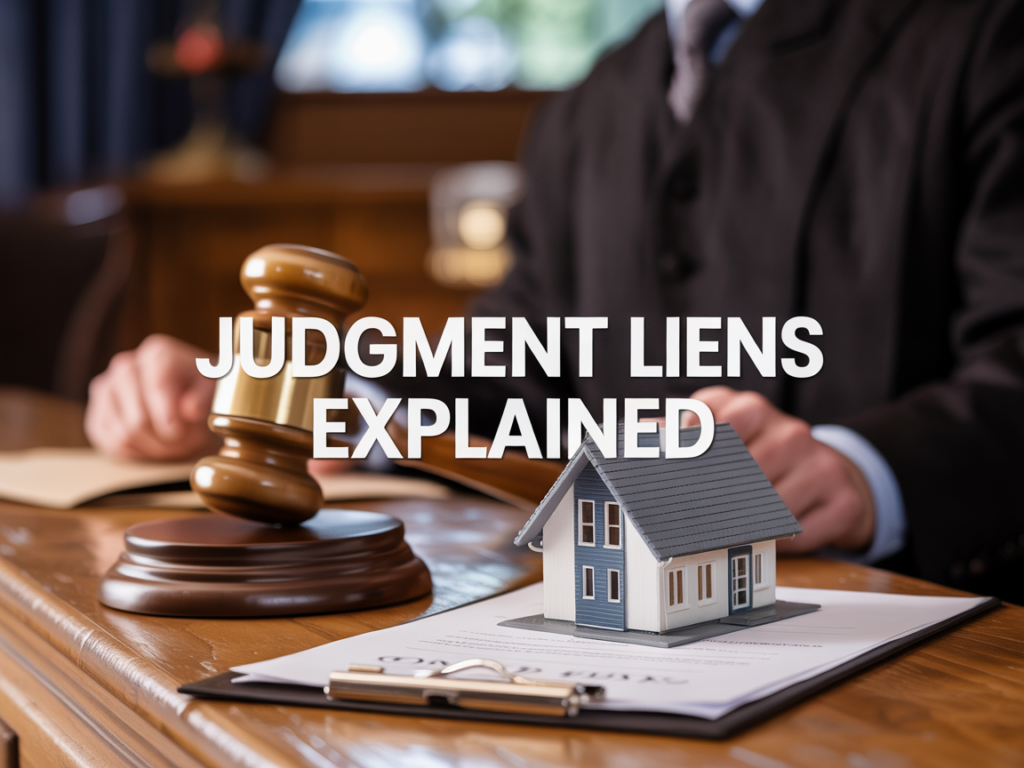
A judgment lien is a legal claim placed against a property after someone loses a lawsuit and is ordered by a court to pay money to the winning party. If the person who owes the money (the debtor) does not pay, the winning party (the creditor) can file the court judgment with the county recorder’s office. Once recorded, the judgment becomes a lien on any real property the debtor owns in that county.
Here is a simple example: A homeowner hires a contractor to remodel their kitchen. A dispute arises, and the contractor sues the homeowner for $25,000 in unpaid work. The court rules in the contractor’s favor and issues a judgment for $25,000. The contractor records that judgment with the county, and it becomes a lien on the homeowner’s property. That lien stays on the property until the debt is paid off, the lien expires, or the property is sold and the lien is satisfied from the sale proceeds.
Judgment liens are different from other types of liens like mortgages or tax liens. A mortgage lien is voluntary. You agree to it when you take out a loan. A judgment lien is involuntary. It gets placed on your property because you lost a lawsuit, whether you like it or not.
Judgment liens can come from all kinds of lawsuits. Common sources include unpaid credit card debt that has been sent to collections and turned into a court judgment, personal injury lawsuits where the property owner was found liable, breach of contract disputes, medical debt that has been pursued through the courts, and business-related lawsuits. The size of the judgment can range from a few hundred dollars to hundreds of thousands, and in some cases, even more.
For real estate investors, judgment liens are particularly important because they can show up on properties you are evaluating at county foreclosure auctions and tax deed sales. The previous owner was likely in financial distress, which means there is a higher chance they had unpaid debts that turned into court judgments. Knowing how to identify and deal with these liens is a key skill for any auction investor.
How Judgment Liens Are Placed on Property
The process of creating a judgment lien typically follows these steps:
A lawsuit is filed and won. Someone sues the property owner and wins a monetary judgment. This could be from a contract dispute, a personal injury claim, a business disagreement, unpaid credit card debt, or any number of other legal claims.
The judgment is recorded. The winning party takes the court judgment to the county recorder’s office (or equivalent office, depending on the state) and records it. In some states, the judgment automatically becomes a lien on all real property the debtor owns in the county. In other states, the creditor needs to take additional steps to attach the judgment to specific properties.
The lien attaches to the property. Once recorded, the judgment lien attaches to any real estate the debtor owns in that county. It can also attach to property the debtor acquires in the future, as long as the judgment is still active.
The lien remains until it is resolved. A judgment lien stays on the property until the debt is paid in full, the lien is released by the creditor, the lien expires under state law (most states have expiration periods ranging from 5 to 20 years, though they can often be renewed), or the property is sold and the lien is paid from the proceeds.
Judgment liens can be placed by individuals, businesses, government agencies, or any other party that wins a monetary judgment in court. They can range from a few hundred dollars to hundreds of thousands of dollars, depending on the size of the judgment.
Impact of a Judgment Lien on Property Ownership
A judgment lien on a property creates several problems for the owner and for anyone looking to buy the property.
It clouds the title. A judgment lien is a cloud on the title, meaning it creates uncertainty about the property’s ownership rights. A property with a judgment lien does not have clear title, which makes it harder to sell, refinance, or obtain title insurance.
It must be addressed before a clean sale. In a traditional real estate sale, the judgment lien needs to be paid off at or before closing. The title company will require the lien to be satisfied before they issue a title insurance policy and record the new deed. If the lien amount is more than the seller’s equity in the property, the sale might not be possible unless the seller brings additional money to the table or negotiates a settlement with the creditor.
It can survive certain types of sales. This is where it gets especially important for auction investors. Whether a judgment lien survives a foreclosure or tax deed sale depends on the state, the type of sale, and the priority of the lien relative to other liens on the property.
At a foreclosure auction, the foreclosing lien (usually the mortgage) and all junior liens are typically wiped out. If the judgment lien was recorded after the mortgage, it is a junior lien and is usually eliminated by the foreclosure sale. However, if the judgment lien was recorded before the mortgage, it may survive as a senior lien. This is why checking the recording dates of all liens is critical before you bid.
At a tax deed auction, the rules vary by state, but tax deed sales generally wipe out most liens, including judgment liens. However, there are exceptions. Some states allow certain government liens or federal tax liens to survive a tax deed sale. Always research your specific state’s rules before assuming a lien has been eliminated.
It affects property value. A judgment lien effectively reduces the value of the property to potential buyers. If you are evaluating a property with a $50,000 judgment lien, you need to factor that amount into your purchase decision. Either you are going to pay it off, negotiate it down, or take the risk that it might survive the sale.
It can prevent refinancing. If you own a property with a judgment lien, most lenders will not approve a refinance until the lien is resolved. The lender wants to be in first lien position, and a judgment lien complicates that. Even if the judgment lien is in a junior position, many lenders are not comfortable lending on a property with unresolved liens.
It creates title insurance complications. Title insurance companies will not issue a clean policy on a property with a judgment lien. The lien would either need to be paid off before the policy is issued, or it would be listed as an exception on the policy, which means it is not covered. For investors planning to resell the property, this can be a significant obstacle because your buyer’s title company will flag the lien as well.
How to Check for Judgment Liens on a Property
Finding out if a property has a judgment lien is part of your due diligence process. Here are the main ways to check:
County recorder’s office: Judgment liens are recorded at the county level, usually with the county recorder, county clerk, or circuit court clerk. You can search these records in person or online (many counties have online databases) to find any recorded judgments against the property owner.
Court records: You can also search court records to find any lawsuits and judgments involving the property owner. This can give you a broader picture of the owner’s legal and financial situation.
Title search: The most efficient way to check for judgment liens is to run a title search. A title search examines the public records and identifies all recorded liens, including judgment liens, mortgage liens, tax liens, and more. At EasyTitleSearch.com, our current owner searches trace the title back to the last vesting deed and reveal recorded liens and encumbrances for just $59. This is one of the fastest and most affordable ways to find out what is attached to a property before you buy.
Title insurance commitment: If you are going through a traditional closing with a title company, the title commitment will list all known liens as exceptions. However, if you are buying at auction, you will not have the luxury of a title commitment before the sale, which makes your own pre-auction research even more important.
Steps to Remove a Judgment Lien
If you find a judgment lien on a property you want to buy, or if you already own a property with a judgment lien, here are the options for dealing with it:
Pay it off. The most straightforward option is to pay the full amount of the judgment. Once paid, the creditor is required to file a satisfaction of judgment with the court, and the lien is released. Get a copy of the satisfaction and make sure it is recorded with the county.
Negotiate a settlement. Creditors are often willing to accept less than the full judgment amount, especially if the judgment is old or the debtor has limited assets. You or your attorney can negotiate a lump-sum settlement for a reduced amount. If the creditor agrees, get the settlement in writing before you pay, and make sure the creditor files a satisfaction of judgment after receiving payment.
File a motion to release the lien. In some cases, you can ask the court to release the judgment lien. This might be possible if the judgment has expired, if the lien was improperly recorded, or if the debtor can show that the property is protected by homestead laws. An attorney can advise you on whether this option is available in your situation.
Wait for it to expire. Judgment liens have expiration periods that vary by state. In some states, a judgment lien expires after 5 to 10 years if the creditor does not renew it. However, many creditors do renew their judgments, so waiting is not always a reliable strategy.
Buy the property at auction and rely on lien priority. If you are buying at a foreclosure or tax deed auction, some judgment liens may be wiped out by the sale. However, you need to understand the priority of the lien and the specific rules in your state before relying on this. Getting it wrong can leave you responsible for a lien you thought was eliminated.
quiet title action. If you buy a property at auction and there is uncertainty about whether a judgment lien survived the sale, you can file a quiet title action in court to establish clear title. This process takes several months and involves legal fees, but it can resolve lingering lien issues and give you a marketable title.
Regardless of which approach you take, always get professional help when dealing with judgment liens. A real estate attorney who understands lien law in your state can advise you on the best strategy and help you avoid costly mistakes. The cost of legal advice upfront is almost always less than the cost of dealing with a lien problem after you have already bought the property.
It is also smart to document everything when resolving a judgment lien. Keep copies of all payment receipts, settlement agreements, satisfaction of judgment filings, and any correspondence with the creditor. You may need these documents later when you sell the property, refinance, or apply for title insurance.
Conclusion: Protecting Your Property from Liens
Judgment liens are a real risk for real estate investors, especially those buying at county foreclosure auctions and tax deed sales. A judgment lien can reduce your profit, complicate your title, and create legal headaches that take time and money to resolve.
The best protection is knowledge. Before you bid on any property, research the title to find out what liens are attached. Understand the priority of each lien and how it is affected by the type of sale. And if you are unsure, consult with a real estate attorney who understands the auction process in your state.
A current owner search from EasyTitleSearch.com is one of the easiest ways to check for judgment liens and other encumbrances before you commit your money. For just $59, we trace the title back to the last vesting deed and identify recorded liens, anywhere in the country. It is a small investment that can save you from big problems down the road.