If you are investing in real estate, you are going to hear the words “title” and “deed” a lot. Many people use them interchangeably, but they are not the same thing. Understanding the difference between a title and a deed is important because it affects how you buy properties, how you protect your ownership, and how you handle title issues when they come up.
In this guide, we will break down what each term means, how they are different, how they work together, and answer the most common questions investors have about titles and deeds.
In this Article
What is a Title in Real Estate?
A title is not a physical document. It is a legal concept. When we say someone “holds the title” to a property, we mean they have the legal right to own, use, and control that property. The title represents the bundle of rights that comes with property ownership.
Think of the title as the idea of ownership itself. You cannot hold a title in your hand or put it in a filing cabinet. It exists as a legal status, and it is proven through the chain of recorded documents at the county level.
The “bundle of rights” that comes with a property title typically includes:
The right of possession: You have the right to physically occupy and use the property. This is the most basic ownership right. If you hold the title, the property is yours to live in, rent out, or leave vacant.
The right of control: You can decide how the property is used, within the limits of local laws and regulations. You can renovate it, landscape it, or change how the interior is configured.
The right of exclusion: You can decide who is and is not allowed on the property. This is why trespassing is illegal. As the title holder, you control access.
The right of enjoyment: You can use the property for any legal purpose. If you want to live there, rent it out, use it as a business, or host events, those are all within your rights as the owner.
The right of disposition: You can sell, transfer, gift, or will the property to someone else. This right is what makes real estate a tradeable asset.
When all of these rights are intact and there are no competing claims, the owner is said to have “clear title” or “free and clear title.” When there is a problem with any of these rights, such as an outstanding lien, a boundary dispute, or an unresolved ownership claim, there is a “title defect” or a “cloud on the title.
For real estate investors, having clear title is essential. When you buy a property at a foreclosure auction or tax deed sale, you want to make sure the title is as clean as possible. That means no surprise liens, no competing ownership claims, and no unresolved legal issues hanging over the property. This is why running a title search before you buy is so important. A current owner search from EasyTitleSearch.com traces the title back to the last vesting deed and identifies recorded liens and encumbrances for just $59.
What is a Deed?
A deed is a physical, legal document. Unlike the title, which is a concept, the deed is something you can print out, sign, record at the county clerk’s office, and put in your safe. The deed is the official paperwork that transfers ownership of real property from one person or entity to another.
When you buy a property, the seller signs a deed transferring their ownership rights to you. That deed is then recorded with the county recorder’s office, which makes it part of the public record. The recorded deed is the proof that ownership changed hands.
There are several types of deeds, and each one offers a different level of protection to the buyer:
General Warranty Deed: This is the strongest type of deed and the one that offers the most protection to the buyer. When a seller gives you a general warranty deed, they are making several guarantees. They are guaranteeing that they legally own the property and have the right to sell it. They are guaranteeing that the property is free from liens and encumbrances (except those specifically listed in the deed). And they are guaranteeing that they will defend your ownership against any future claims that arise from problems that existed before the sale. General warranty deeds are the standard in most traditional home sales.
Special Warranty Deed: A special warranty deed is more limited than a general warranty deed. The seller only guarantees that they did not create any title problems during the time they owned the property. They make no guarantees about what happened before they took ownership. If a title defect from a previous owner surfaces, the buyer is on their own. Special warranty deeds are commonly used in commercial transactions and by banks selling REO (Real Estate Owned) properties.
Quitclaim Deed: This is the weakest type of deed. With a quitclaim deed, the seller transfers whatever interest they have in the property, but they make no guarantees at all. They are not even guaranteeing that they actually own the property. Quitclaim deeds are commonly used between family members, in divorce settlements, or to clear up title issues. They are also sometimes used in tax deed sales. If someone gives you a quitclaim deed, you are accepting whatever they have, with no warranties or protections.
Bargain and Sale Deed: This type of deed implies that the seller holds title to the property but does not provide any guarantees against liens or encumbrances. It is sometimes used in foreclosure sales and tax deed sales. It offers slightly more protection than a quitclaim deed but far less than a warranty deed.
Sheriff’s Deed or Tax Deed: These are special deeds issued by a government authority after a foreclosure sale or tax deed sale. A sheriff’s deed is typically issued after a judicial foreclosure, while a tax deed is issued after a tax deed auction. These deeds transfer whatever interest the previous owner had, but they do not come with any warranties. The government is simply conveying the property based on the legal process, not guaranteeing the condition of the title.
As an investor, the type of deed you receive matters a lot. When you buy a property at a county foreclosure auction, you will likely receive a sheriff’s deed, a trustee’s deed, or a tax deed, depending on the state and the type of sale. These deeds offer limited or no warranties, which is why doing your own title research before the auction is critical.
Key Differences Between Title and Deed
Now that you understand what each term means, let us put the differences side by side.
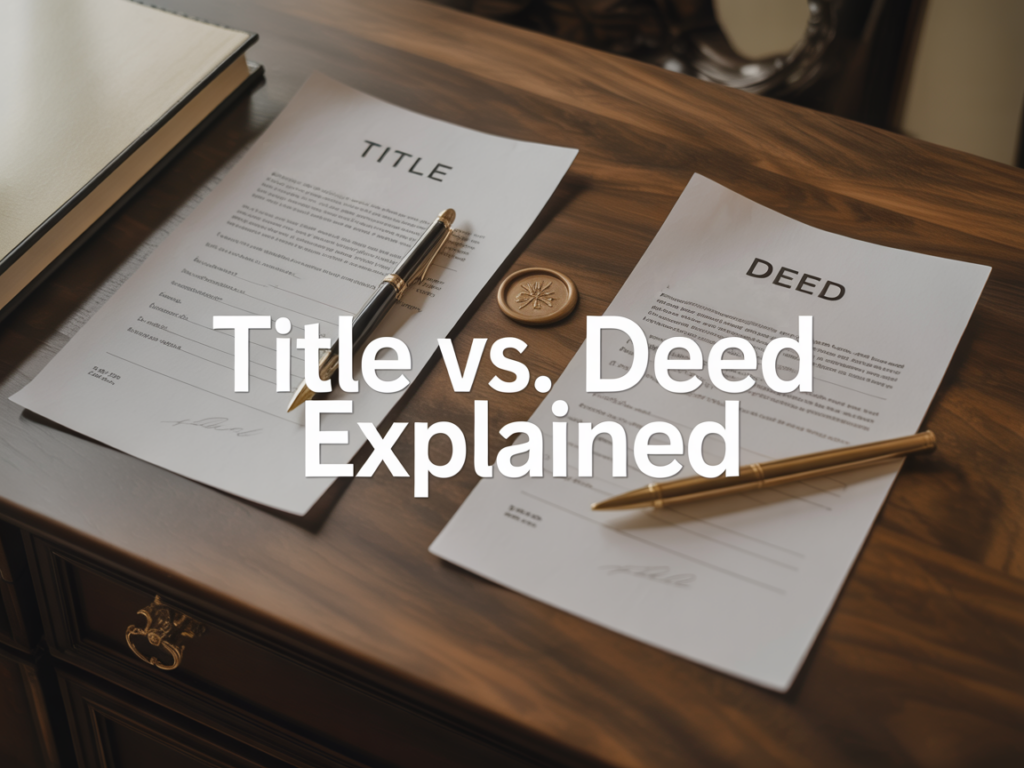
Physical vs. conceptual: A deed is a physical document that you can hold, sign, and record. A title is a legal concept representing your ownership rights. You have a deed in your possession. You hold the title as a legal status.
Transfer mechanism vs. ownership status: The deed is the tool used to transfer ownership from one person to another. The title is the ownership itself. When you sign a deed, you are transferring the title. The deed is the vehicle. The title is the destination.
Recorded document vs. legal right: The deed is recorded in the public records at the county level. The title is not a document that gets recorded. Instead, the title is established and proven through the chain of recorded deeds and other documents over time.
One-time event vs. ongoing status: A deed is created and signed at a specific point in time during a real estate transaction. The title is an ongoing status that continues as long as you own the property. Your title can be affected by events that happen after the deed is recorded, such as new liens being placed on the property.
Different types offer different protections: The type of deed you receive determines the level of protection the seller is giving you. A general warranty deed offers the most protection because the seller is guaranteeing the quality of the title. A quitclaim deed offers the least because the seller makes no guarantees at all. The title itself does not come in types. Either you have clear title or you do not.
How Titles and Deeds Work Together in Property Ownership
The title and the deed are two sides of the same coin. You cannot have one without the other in a real estate transaction.
Here is how they work together in a typical property purchase:
Step 1: The title search. Before the sale, a title search is conducted to examine the current state of the title. This search looks at the chain of recorded deeds, mortgages, liens, and other documents to verify who currently owns the property and whether there are any problems with the title.
Step 2: Clearing title defects. If the title search reveals any issues, those problems need to be resolved before closing. This might mean paying off a lien, correcting a recording error, or obtaining a release from a previous lender.
Step 3: The deed is prepared and signed. Once the title is cleared, the seller signs a deed transferring their ownership rights to the buyer. The type of deed used depends on the nature of the transaction and the negotiations between the parties.
Step 4: The deed is recorded. The signed deed is submitted to the county recorder’s office, where it becomes part of the public record. This recording is what officially transfers the title from the seller to the buyer in the eyes of the law.
Step 5: The buyer holds the title. After the deed is recorded, the buyer now holds the title to the property. They have the legal right to possess, use, control, and eventually sell or transfer the property.
For auction investors, this process is compressed and simplified. At a foreclosure or tax deed auction, you bid and win the property. The county or the court issues a deed (a sheriff’s deed, trustee’s deed, or tax deed) after the sale. Once that deed is recorded, the title passes to you. But because there is no traditional title search or clearing process before the auction, it is up to you to do your own research.
This is where a title search from EasyTitleSearch.com can save you from expensive surprises. For just $59, we trace the ownership back to the last vesting deed and identify any recorded liens or encumbrances. Knowing what is on the title before you bid can mean the difference between a profitable investment and a costly mistake.
Common Questions About Titles and Deeds
Here are answers to some of the questions investors ask most often about titles and deeds:
Can I have a deed but not have clear title? Yes. This is more common than people think. You can receive a deed and have it recorded, but if there are outstanding liens, unresolved ownership claims, or other defects, the title is not clean. You technically own the property, but your ownership rights might be limited or challenged. This is especially common with properties purchased at auction.
Does a quitclaim deed give me clear title? Not necessarily. A quitclaim deed only transfers whatever interest the grantor has. If the grantor has no interest in the property, you get nothing. And even if they do own the property, a quitclaim deed does not guarantee that the title is free of liens or other defects. Always do a title search when receiving a quitclaim deed.
What if there is no deed on file at the county? If a deed was never recorded, it can create a gap in the chain of title. While an unrecorded deed might still be valid between the parties who signed it, it does not provide notice to the public or protect the buyer’s ownership against third-party claims. If you discover a gap in the chain of title, it may need to be resolved through a quiet title action in court.
Do I need to keep my deed after it is recorded? The original recorded deed is stored at the county recorder’s office and is part of the permanent public record. You should keep a copy for your personal records, but if you lose your copy, you can always obtain a certified copy from the county.
What is a cloud on the title? A cloud on the title is any claim, lien, or encumbrance that could affect the owner’s rights or the ability to sell the property. Common clouds include unresolved liens, recording errors, boundary disputes, and ownership claims from third parties. Clearing a cloud on the title might require paying off a debt, filing corrective documents, or pursuing a quiet title action.
What is a quiet title action? A quiet title action is a lawsuit filed in court to establish clear ownership of a property and remove any competing claims. Investors who buy properties at tax deed auctions sometimes file quiet title actions to clean up the title and make the property easier to sell or insure in the future. The process can take several months and involves legal fees, but it is often necessary for properties with complex title histories.
Can liens on a property transfer to me when I buy it? It depends on the type of sale and the type of lien. In a foreclosure sale, the foreclosing lien is wiped out and junior liens are typically eliminated. However, certain liens, like property tax liens or some government liens, may survive the foreclosure. In a tax deed sale, most liens are wiped out, but mortgage liens and other encumbrances may survive depending on the state. Always research the specific rules in your state and check the title before buying.
Conclusion: Navigating Real Estate Terminology
The difference between a title and a deed is one of the most fundamental concepts in real estate, but it trips up a lot of people. Here is the simple version: the title is your legal right to own the property. The deed is the document that transfers that right from one person to another.
As an investor, you deal with both on every transaction. The type of deed you receive determines what guarantees the seller is making about the title. When you buy at a foreclosure or tax deed auction, you typically receive a deed with minimal or no warranties, which means you need to do your own homework to understand the condition of the title before you bid.
A current owner search from EasyTitleSearch.com is one of the easiest ways to research a property’s title before you commit your money. For just $59, we trace the ownership back to the last vesting deed and identify any recorded liens and encumbrances, anywhere in the country. Whether you are buying your first investment property or your fiftieth, knowing what is on the title is always the smart move.
The more you understand about how titles and deeds work, the better equipped you will be to spot problems, protect your investments, and close deals with confidence.