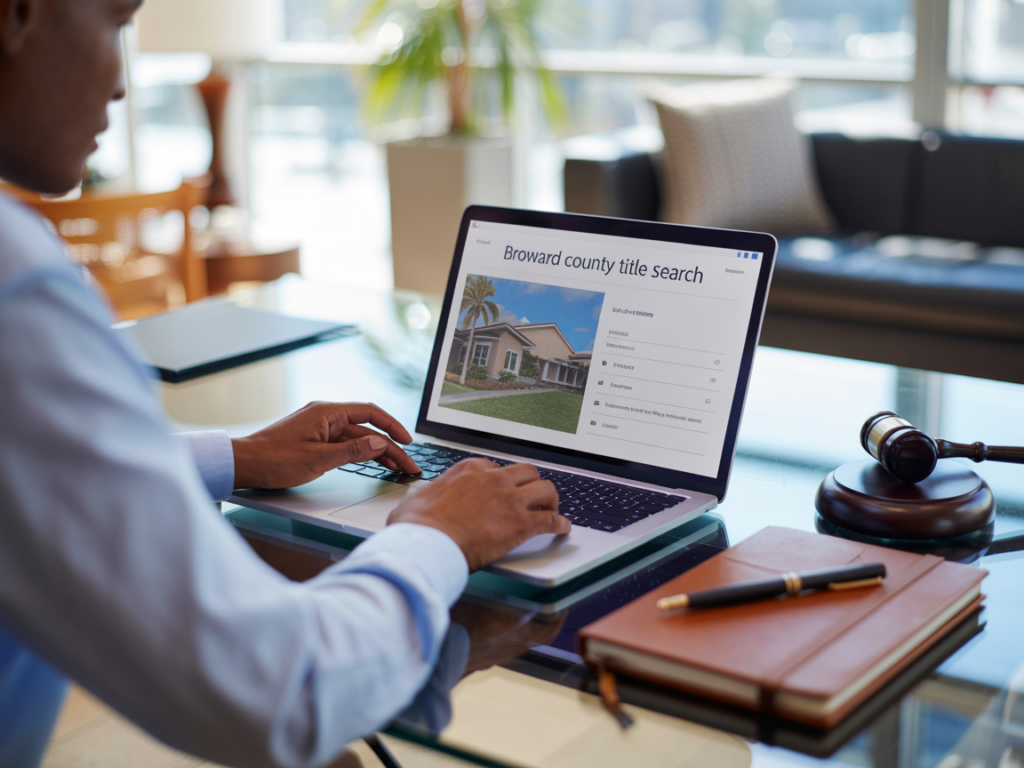
Buying a property at the Broward County foreclosure auction without doing a title search is like playing poker blindfolded: you might win occasionally, but more often you’ll lose big. Every lien, judgment, or unpaid tax that survives the auction becomes your problem the moment you win the bid. While the price may appear to be a deal on the surface, one missed document can turn a profitable flip into a financial sinkhole.
- Step 1: Identify the Property and Current Owner
- Step 2: Access Official Records
- Step 3: Review the Deed History
- Step 4: Search for Open Mortgages
- Step 5: Check for Judgments
- Step 6: Look for HOA and Condo Association Liens
- Step 7: Verify Property Taxes and Tax Liens
- Step 8: Check for Federal Liens
- Step 9: Examine Lis Pendens and Foreclosure Filings
- Step 10: Analyze and Organize the Title Chain
This guide gives you the exact steps that experienced investors and title professionals follow to uncover what’s really encumbering a property before bidding. If you’re planning to go it alone at the auction without professional help, this process isn’t optional, it’s your safety net. Read it carefully, follow it methodically, and don’t place a bid until you’ve cleared every item on this list.
In this Article:
Step 1: Identify the Property and Current Owner
Start with the Broward County Property Appraiser’s Office:
Go to bcpa.net. The Broward County Property Appraiser is your first stop for accessing official ownership and property data. You can search by address, owner name, or parcel (folio) number. Use the search that gets the most accurate result based on what you know.
Verify the Owner of Record:
Once you locate the property, confirm the name of the current owner listed. Confirming the name is crucial for performing an accurate title search because liens and judgments are typically filed under the owner’s legal name rather than the property address. If the property is owned by an LLC or trust, make a note, as this may require searching for additional parties or using alternative names when reviewing official records.
Capture the Legal Description and Folio Number:
The legal description and folio number (parcel ID) listed here are key for cross-referencing records later. The legal description ensures you’re looking at the exact piece of land in question, especially in cases where addresses may be duplicated or changed. The folio number is also used by both the Broward tax collector and the Broward clerk of courts, so write it down exactly as shown.
Review Sales History and Deed Type:
Scroll down to see the most recent sales and transfers. Pay attention to the deed type used (e.g., Warranty Deed, Quitclaim Deed, Certificate of Title). The deed type provides insight into how ownership was transferred and whether the current owner has received full title rights or something less secure. For example, a Quitclaim Deed may signal potential title issues.
Step 2: Access Official Records
Use the Broward County Official Records Search:
Visit the official records portal at Broward County Official Records. The official records are where all recorded documents related to real estate, such as deeds, mortgages, liens, judgments, and satisfactions, are stored. You’ll be able to search by name, document type, or date range.
Search Using the Owner’s Name (Not the Address):
Title records are indexed by the grantor/grantee name, not the property address. Search for the full legal name of the current owner, exactly as listed on the Property Appraiser’s site. If the owner is a trust, LLC, or corporation, search for any known variations, as these entities may be recorded under different names.
Filter and Identify Relevant Documents:
Use filters to focus on key document types, such as Warranty Deeds, Mortgages, Satisfactions, Claims of Lien, Judgments, and lis pendens. Each document should be opened and reviewed for its relation to the property in question. Note the document number and recording date for future reference when analyzing the chain of title.
Step 3: Review the Deed History
Locate the Most Recent Deed:
Find the most recent deed transferring ownership to the current owner. Look for a Warranty Deed, Special Warranty Deed, Quitclaim Deed, or Certificate of Title, depending on the type of transfer. Open the document and verify that the legal description matches what you found on the Property Appraiser site.
Understand the Chain of Title:
The current deed should show who sold the property to the current owner. From there, you can trace backward through earlier deeds to understand the history of ownership. Watch for red flags, such as overlapping ownership dates, missing deed transfers, or quitclaim deeds between unrelated parties, which may indicate potential title defects.
Pay Attention to Deed Language and Exceptions:
Read the fine print in the deed for any exceptions, reservations, or easements. These could affect your ability to use or transfer the property cleanly in the future. Look for terms that reference association rights, access easements, or utility obligations that may still be enforceable.
Step 4: Search for Open Mortgages
Identify All Recorded Mortgages:
Search the owner’s name in the official records for all mortgages or deeds of trust. Make a list of each loan recorded, including the lender, loan amount, and recording date. Note which lender was in first position based on the earliest recording date.
Look for Satisfactions or Releases:
For each mortgage found, check whether a Satisfaction of Mortgage or Release of Lien has been recorded. If no release is found, the loan may still be open or have been included in a foreclosure—verify carefully in later steps. Missing satisfactions can complicate ownership transfers or prevent clear title.
Assess the Risk of Surviving Mortgages:
If you are buying at auction or through foreclosure, it’s critical to know whether the foreclosure wipes out all mortgages. If the foreclosure was on a junior lien, any senior mortgages may remain enforceable. Research the foreclosure complaint and case docket to confirm the lien position and the type of judgment.
Step 5: Check for Judgments
Search for Civil and Circuit Court Cases:
Go to the Broward County Clerk of Courts case search at https://www.browardclerk.org/. Run a search under the current owner’s name in civil and circuit court divisions. You’re looking for cases that resulted in financial judgments that could have been recorded as liens.
Identify Recorded Judgments:
If you find cases involving credit card companies, hospitals, government agencies, or debt collectors, open the case documents to see if a final judgment was entered. Then, go back to the official records site and search for recorded liens using the judgment creditor’s name. Judgments may attach to all property owned by that person in the county.
Understand Judgment Enforcement Rules:
Florida judgments are valid and enforceable for 10 years, and they can be re-recorded for an additional 10. Even if the judgment is older, it may still be active. Additionally, Florida permits renewals and can attach judgments to homesteads under certain fraud exceptions. If you see an active judgment lien with no satisfaction or expiration, it must be addressed.
Step 6: Look for HOA and Condo Association Liens
Search for Recorded Claims of Lien:
On the official records portal, filter document types to include “Claim of Lien” or search using the name of the HOA or condo association if known. These documents are often recorded when an owner falls behind on assessments and are attached to the property until the assessments are paid or the property is foreclosed upon.
Review the Declaration of Covenants or Condominium Documents:
If you’re not familiar with the association rules, search the original declaration of covenants or condo documents to understand their enforcement rights. These filings will usually specify whether the HOA has super lien rights, fine authority, or the ability to initiate foreclosure independently.
Assess the Risk and Foreclosure Implications:
HOA or condo liens may survive certain foreclosures, especially if the lien was not included in the foreclosure lawsuit. In Florida, some associations also have limited reimbursement rights even after foreclosure. HOA & Condo liens are a high-risk area for auction buyers and should always be verified.
Step 7: Verify Property Taxes and Tax Liens
Check Delinquent Taxes with the Broward County Tax Collector:
Visit the Broward County tax portal. Search by address or folio number to view your tax status. Look for unpaid tax balances, penalties, or tax certificates that have been sold to investors.
Identify Tax Certificates or Tax Deed Applications:
If the property has delinquent taxes, the county may have sold a tax certificate, or the certificate holder may be pursuing a tax deed auction. These actions take precedence over most other liens and, in many cases, result in loss of title if not redeemed.
Understand the Superiority of Tax Liens:
Florida tax liens are senior to nearly all private liens, including mortgages. If you’re buying at foreclosure and there are outstanding tax issues, you may lose the property in a future tax deed sale unless you redeem those taxes. Always include tax verification as part of your due diligence.
Step 8: Check for Federal Liens
Search Official Records for Federal or IRS Liens:
Use the name of the owner to search for liens recorded by federal agencies such as the IRS, Department of Justice, U.S. Attorney, or Department of Education. These often appear under names like “United States of America” or “Internal Revenue Service.”
Understand the Survival of Federal Liens:
Unlike most private liens, federal tax liens may survive foreclosure sales unless the U.S. government was properly notified and given a chance to redeem the property. Even then, they may retain rights for 120 days post-sale. Failure to address these liens can result in the federal government reclaiming the asset.
Confirm Status or Seek Professional Help:
If you find a federal lien and can’t locate a release or withdrawal, assume it is still enforceable. These liens are complex and should be reviewed with a title expert or real estate attorney before proceeding with a purchase.
Step 9: Examine Lis Pendens and Foreclosure Filings
Search for Lis Pendens Documents:
In the official records site, search for “Lis Pendens” recorded against the owner or property. These notices indicate that a lawsuit involving the property has been filed, typically related to foreclosure, HOA disputes, or partitions. Open the document and make note of the case number and parties involved.
Review the Foreclosure Case Details:
Go to https://www.browardclerk.org/ and enter the case number to view court records. Confirm which lienholder initiated the foreclosure—whether it’s a primary mortgage lender, HOA, or junior lienholder. Understanding the filing party helps you understand what liens may or may not be extinguished by the auction sale.
Identify What the Foreclosure Judgment Covers:
Read the Final Judgment to see which specific liens are being foreclosed. If a junior lien is being foreclosed and senior mortgages are not named, those senior liens will likely remain attached to the property. Always read the plaintiff’s list and judgment language carefully.
Step 10: Analyze and Organize the Title Chain
Create a Clear Timeline of Events:
Use all gathered documents to lay out a timeline starting from the earliest known deed to the current owner. Include each deed, mortgage, lien, satisfaction, and court action. The timeline you are creating provides a visual sense of how the title evolved and where risks may be hidden.
Determine Lien Priority and Risk Exposure:
Use recording dates to establish the priority of each lien. Generally, liens recorded earlier have higher priority unless a statute or special rights dictate otherwise (e.g., tax liens, some HOA super liens). Highlight any unresolved or unreleased items that might survive a foreclosure.
Decide Whether to Proceed or Order a Title Search:
If the chain looks clean, you may feel confident proceeding. If anything is unclear, conflicting, or missing, it’s wise to order a professional title search from a trusted provider. Even pros double-check their work—this step protects your investment and can save you from a costly mistake.
Don’t Go It Alone on Broward Title Searches
Doing a title search in Broward County is one of the most important steps you can take before buying at auction. It’s the only way to uncover hidden risks, such as unpaid mortgages, outstanding judgments, HOA super liens, federal tax liens, or delinquent property taxes, that could survive the sale. Following the ten steps in this guide will help you spot red flags early, understand lien priority, and avoid bidding on a property that could drain your profits before you ever take possession.
That said, Broward’s public records system can be tricky to navigate, and interpreting what you find takes experience. That’s why we strongly recommend using a professional Broward County title search service like ours to double-check your work—or handle the entire search for you. We encourage our clients to use this very same guide to follow along and verify our findings. When you’re dealing with auction properties, a missed detail can be expensive, but a second look never is. It’s the smartest layer of protection you can add before you bid.