Title insurance is one of those things you hear about at closing, but many buyers never take the time to understand what it actually covers. If you are spending money on a policy, you should know exactly what protection you are getting and, just as important, what falls outside that protection.
In this guide, we will explain the specific risks title insurance covers, the differences between lender’s and owner’s coverage, and the exclusions that catch many buyers off guard. We will also talk about how title insurance differs from a preliminary title search, which is what we provide at EasyTitleSearch.com.
In this Article:
Introduction to Title Insurance
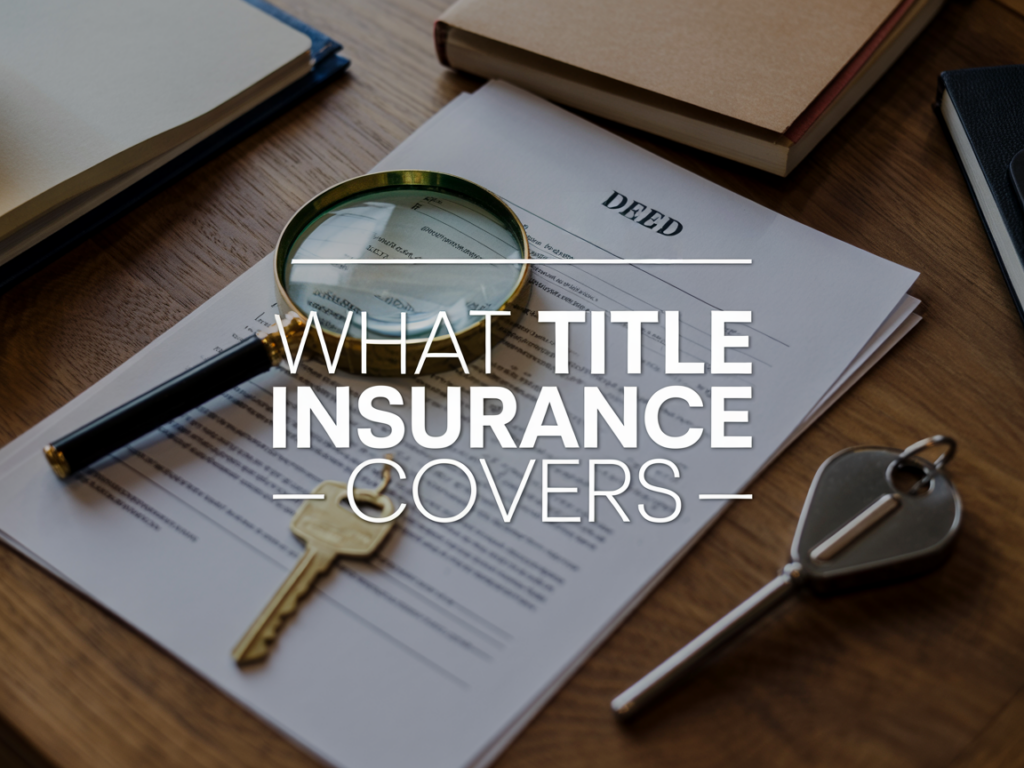
Title insurance is a policy purchased at closing that protects property buyers and lenders against financial loss caused by defects in a property’s title. The “title” is your legal right to own and use the property. If something in the ownership history is wrong and it threatens your rights, title insurance is designed to cover the financial fallout.
You pay for title insurance once at closing, and the coverage lasts as long as you own the property. There are no monthly premiums or annual renewals. It protects against problems that existed before you bought the property but were not discovered during the title search process.
It is important to understand that a title search and title insurance are two different things. The title search is the research process that examines public records to find problems. Title insurance is the policy that covers you if the search missed something. At EasyTitleSearch.com, we provide preliminary title searches for your own due diligence. Our searches trace the ownership back to the last vesting deed and identify recorded liens and encumbrances for just $59. We do not provide title insurance. Our service is designed to give investors the information they need to make smart decisions, especially before bidding at county foreclosure and tax deed auctions.
Types of Title Insurance Coverage
There are two main types of title insurance policies. They protect different parties and provide different levels of coverage.
Lender’s Title Insurance Coverage
Lender’s title insurance protects the bank or mortgage company that is lending you money to buy the property. If you are financing your purchase, the lender will require you to buy this policy. It is not optional.
The lender’s policy covers the outstanding loan balance. If a title defect causes the lender to lose money, the insurance company reimburses them up to the mortgage amount. It also covers the legal costs of defending the lender’s lien position if someone challenges it.
The critical thing to understand is that a lender’s policy only protects the lender. It does not protect you as the buyer. If a title problem wipes out your equity but the mortgage is still secure, the lender gets paid and you get nothing. The coverage also decreases as you pay down the mortgage and disappears completely once the loan is paid off.
Owner’s Title Insurance Coverage
Owner’s title insurance protects you, the property buyer. This is the optional policy that most people debate about purchasing.
An owner’s policy covers you for the full purchase price of the property. If a title defect causes you to lose the property, the insurance company compensates you up to the coverage amount. It also pays for legal defense if anyone challenges your ownership based on a pre-existing title defect.
Owner’s coverage lasts for as long as you or your heirs own the property. There are no renewals, no expiration dates, and no ongoing costs. You pay once and you are covered.
For investors buying at auction with cash, there is no lender involved, so there is no lender’s policy. If you want title insurance, you would need to purchase an owner’s policy after the sale, which can sometimes be difficult to obtain on auction-purchased properties.
Common Risks Covered by Title Insurance
Now let us get into the specific risks that title insurance is designed to protect against.
Title Defects
A title defect is any problem in the ownership history that could threaten your legal rights to the property. Common title defects include errors in deeds such as misspelled names, incorrect legal descriptions, or missing signatures. They also include improper transfers where a previous sale was not conducted properly, and gaps in the chain of title where a transfer was not recorded. Title insurance covers losses if these defects are discovered after you buy.
Unknown Liens
Liens are legal claims against a property, usually for unpaid debts. Title insurance covers several types of liens that might not be discovered during the title search. These include mortgage liens that were not properly released, tax liens for unpaid property or income taxes, mechanic’s liens filed by contractors who were not paid, judgment liens from lawsuits against previous owners, and HOA liens for unpaid homeowner association dues.
For auction investors, liens are one of the biggest risks. Properties that go through foreclosure or tax deed sales often have multiple liens attached to them. Some of these liens survive the auction, depending on the type and the state. This is why running a preliminary title search before you bid is so critical. A search from EasyTitleSearch.com can reveal recorded liens for just $59, giving you a clear picture of what you are getting into before you raise your hand at auction.
Fraud and Forgery
Title fraud is one of the most serious risks because it is nearly impossible to detect through a standard title search. If someone forged a signature on a deed, impersonated the property owner to complete a sale, or recorded fraudulent documents with the county, those problems might look completely legitimate in the public records. Title insurance is one of the few protections against these kinds of hidden fraud.
Exclusions: What Title Insurance Does Not Cover
Title insurance has real limitations, and knowing what is excluded is just as important as knowing what is covered.
Known defects: If a title problem was discovered during the title search and disclosed to you before closing, the policy will not cover it. These known issues are listed as exceptions on your policy.
Government regulations and zoning: Losses caused by zoning ordinances, building codes, or other government regulations are not covered. If you buy a property planning to use it as a rental and then discover zoning laws prohibit that use, title insurance will not help.
Environmental issues: Contamination, hazardous materials, and environmental cleanup requirements are excluded from standard policies.
Matters visible through survey or inspection: If a boundary encroachment, easement, or physical problem would have been visible through a survey or inspection, title insurance typically does not cover it.
Post-purchase events: Title insurance only covers defects that existed before your purchase. Anything that happens after you take ownership is not covered.
Water and mineral rights: Standard policies usually do not cover disputes over water or mineral rights unless you add specific endorsements.
For investors, these exclusions are especially relevant when buying distressed properties. Many of the issues you encounter on auction purchases fall into excluded categories. That is why combining title insurance (when available) with thorough pre-purchase research gives you the strongest protection.
Conclusion: Ensuring Comprehensive Property Protection
Title insurance provides valuable protection against hidden title defects, liens, fraud, and other ownership risks. But it does not cover everything, and for auction investors, it can be difficult to obtain in the first place.
That is why pre-purchase due diligence is so important. Before you bid on any property at a foreclosure or tax deed auction, you need to understand the ownership history and what liens or encumbrances are attached to the title. At EasyTitleSearch.com, we provide preliminary title searches for your own due diligence. Our searches trace ownership back to the last vesting deed and reveal recorded liens, all for just $59 nationwide. We do not offer title insurance, but we give you the information you need to make confident investment decisions.
Whether you end up purchasing title insurance after closing or rely on thorough research and due diligence, understanding what is and is not covered puts you in a stronger position as an investor. Knowledge is always your best protection.