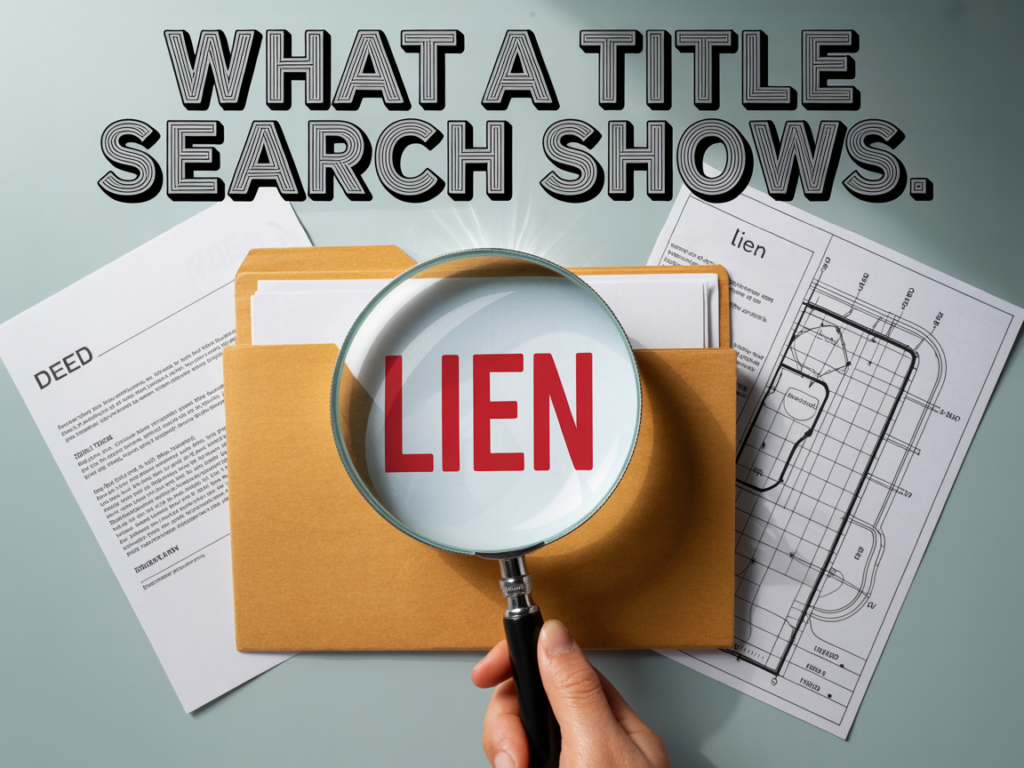
A title search pulls back the curtain on a property’s history. It shows you who owns it, who has claims against it, and whether there are any problems that could affect your ownership. If you are buying real estate, this information is essential.
This guide explains exactly what a title search reveals, the common issues it uncovers, and the differences between a full title search and the O & E reports that EasyTitleSearch.com provides.
In this Article:
What is a Title Search?
A title search is an examination of public records related to a specific property. A trained searcher reviews deeds, mortgages, liens, court records, tax records, and other documents filed with the county. The result is a report that shows the property’s ownership history and any recorded claims against it.
Who Performs Title Searches?
Title companies, abstractors, and specialized title search providers all perform searches. In a traditional real estate transaction, the title company handles the search as part of the closing process. For investors buying at auction, independent providers like EasyTitleSearch.com offer faster, more affordable options for pre-purchase due diligence.
Key Information Revealed in a Title Search
Here is what a title search uncovers.
Ownership History
The title search traces who has owned the property and when. Every transfer from one owner to the next should be documented with a recorded deed. The complete sequence of transfers is called the “chain of title.”
What a Clean Chain Looks Like
A clean chain of title shows each transfer in order, with no gaps. Owner A sold to Owner B. Owner B sold to Owner C. Owner C is selling to you. Every deed is recorded. Every name matches. Every legal description is consistent.
Red Flags in the Chain
Gaps in the chain of title are a red flag. If a transfer was never recorded, or if a deed is missing, it creates uncertainty about who legally owns the property. Multiple transfers in a short time period can signal fraud or distress. A foreclosure or tax deed sale in the chain adds complexity.
What the Full Search Shows vs. the O & E
A full title search traces every owner back 30 to 60 years. You see the complete history. An O & E report from EasyTitleSearch.com shows the current owner and how they acquired the property. For due diligence, the current ownership period is where most active problems live. Liens, judgments, and encumbrances from the current owner are the ones most likely to affect your purchase.
Existing Liens
Liens are one of the most important things a title search reveals. A lien is a legal claim on the property for unpaid debt.
Types of Liens You Might See
Mortgage liens from current or previous loans. Tax liens from unpaid property taxes, income taxes, or other government assessments. Judgment liens from court cases the owner lost. Mechanic’s liens from contractors who did not get paid. HOA liens from unpaid homeowner association dues. Code violation liens from unpaid city or county fines.
Why Liens Matter
Any lien on the property needs to be addressed before you can get clear title. Some liens get paid off at closing. Some get wiped out by foreclosure or tax deed sales. Others survive the sale and become your problem. Knowing which liens exist and their priority is critical for making smart buying decisions.
Easements and Restrictions
Easements give someone else the right to use part of your property. Restrictions limit what you can do with the property.
Common Easements
Utility easements allow power, water, and gas companies to access their infrastructure on your land. Access easements allow neighbors to cross your property to reach theirs. Drainage easements allow water to flow across your land through designated channels. These are recorded in the public records and show up on the title search.
Common Restrictions
Deed restrictions limit how you can use the property. They might restrict the type of buildings you can construct, prohibit commercial use, or require certain architectural standards. HOA covenants and conditions are also recorded restrictions. These affect what you can do with the property after you buy it.
Why This Matters for Investors
An easement that runs through the middle of a lot could limit your building plans. A restriction that prohibits short-term rentals kills your Airbnb strategy. Know these details before you buy, not after.
Can You Remove Easements or Restrictions?
Some easements and restrictions can be modified or removed. Utility easements are usually permanent. Access easements can sometimes be relocated by agreement. Deed restrictions can occasionally be challenged if they are outdated or unenforced. But do not count on removing them. Evaluate the property based on the restrictions as they currently exist.
Legal Descriptions
Every recorded document references the property by its legal description, not its street address. The title search verifies that all documents in the chain use the same legal description.
What a Legal Description Looks Like
Legal descriptions use lot and block numbers from a recorded plat, or metes and bounds descriptions that define the property by measurements and directions. They are precise and technical. A small error in the legal description can mean the documents describe a different property entirely.
Discrepancies
If the legal description changes between documents, the title search flags it. This could be a simple correction or it could indicate a more serious problem. Either way, it needs investigation before you close.
Full Title Search vs. O & E Report
Not all title searches provide the same level of detail. Understanding the difference helps you choose the right one for your situation.
Full Title Search
A full title search goes back 30 to 60 years or more. It traces every transfer and examines every recorded document in the chain. Title companies require this level of detail before issuing title insurance. It takes 3 to 14 business days and costs $150 to $400 or more.
O & E Report (Current Owner Search)
An O & E report (ownership and encumbrance report) covers only the current owner’s period. It traces ownership back to the last vesting deed and identifies liens and encumbrances recorded during that time. It is faster, more affordable, and designed for due diligence rather than insurance issuance.
At EasyTitleSearch.com, our O & E reports cost $59 and turn around as fast as same day. They show current ownership, recorded liens, mortgages, judgments, and encumbrances. For investors evaluating properties before an auction, this is the ideal tool. You get the critical facts without the full search timeline or cost.
Key Differences
A full search goes deeper. It catches problems from decades ago that an O & E might miss. But for auction investors who need to screen multiple properties quickly, the O & E covers the most common and most dangerous risks: current ownership disputes, recent liens, and active encumbrances.
When to Use Each
Use an O & E report when you are screening properties before an auction, evaluating whether to make an offer, or checking for obvious title problems fast. Use a full title search when you are closing on a property, obtaining title insurance, or dealing with a property that has a long and complicated history.
Why a Title Search is Crucial Before Buying Property
Skipping the title search is like buying a used car without checking for liens. You might get lucky. Or you might end up owning something that someone else has a legal claim to.
Protection Against Financial Loss
A $50,000 lien you did not know about wipes out your profit and then some. A boundary dispute that blocks your building plans destroys your development strategy. A missing heir who shows up with a legal claim can threaten your entire ownership. The title search finds these problems before they cost you money.
Think of the title search as the cheapest insurance you can buy. For $59 to a few hundred dollars, you learn about problems that could cost you tens of thousands. The return on investment is enormous.
Especially Important at Auction
At county auctions, there is no title company protecting you. No one runs a search on your behalf. No one verifies the title is clean. If you bid and win a property with hidden problems, those problems are yours. A $59 title search from EasyTitleSearch.com is cheap insurance against expensive surprises.
Common Issues Found in a Title Search
Here are the problems title searches uncover most frequently.
Unreleased Mortgages
The previous owner paid off their loan, but the lender never filed a release. The mortgage shows as active in the records. It needs to be cleared before you can get clean title.
Judgment Liens
The owner lost a lawsuit and the judgment was recorded against the property. This lien must be addressed before the title is clear.
Tax Liens
Unpaid property taxes or income taxes resulted in a government lien. Tax liens take priority over most other claims and must be resolved.
Recording Errors
A misspelled name, wrong parcel number, or incorrect legal description can cloud the title. These are usually fixable with corrective documents.
Easement Conflicts
An easement that conflicts with your intended use of the property needs to be understood before you buy. Some easements are minor. Others can significantly limit what you can do with the land.
Boundary Issues
A title search can reveal discrepancies in the legal description that suggest boundary problems. If two adjacent properties have overlapping legal descriptions, or if a deed references a survey that shows different boundaries than expected, the title search flags it. A property survey resolves these questions definitively.
Probate Issues
If a previous owner died and the estate was not properly settled through probate, the title search will show it. Incomplete probate means the property transfer may not be legally valid. This needs to be resolved before clear title can be established.
What to Do If Problems Arise from a Title Search
If your title search reveals issues, you have options.
Negotiate with the Seller
Ask the seller to resolve the issue before closing. They might need to pay off a lien, get a mortgage release, or file corrective documents.
Adjust Your Offer
If the issue will cost money to resolve, reduce your offer by that amount. This is common at auctions where you subtract lien costs from your maximum bid.
Walk Away
If the problems are too severe or too expensive to fix, walk away. There will always be another property. Walking away from a bad deal saves you money and time.
Get Legal Advice
For complex title issues, hire a real estate attorney. They can interpret the search results, advise you on your options, and handle legal filings like quiet title actions if needed.
Use the Information to Your Advantage
Title problems are not always deal-killers. Sometimes they create opportunity. A property with a lien that scares away other buyers might be available at a steep discount. If you know how to resolve the lien affordably, you profit from information that other buyers do not have. The title search gives you that edge.
Conclusion: Ensuring a Clear Title Before Purchase
A title search shows you what you are really buying. It reveals ownership history, liens, easements, restrictions, and legal descriptions. Without this information, you are buying blind.
For traditional purchases, a full title search is part of the closing process. For auction investors, an O & E report from EasyTitleSearch.com delivers the essential facts for $59 with same-day turnaround. It traces ownership back to the last vesting deed and reveals recorded liens and encumbrances. Fast, affordable, and nationwide.
Check the title before you buy. It is the smartest move you can make as an investor.